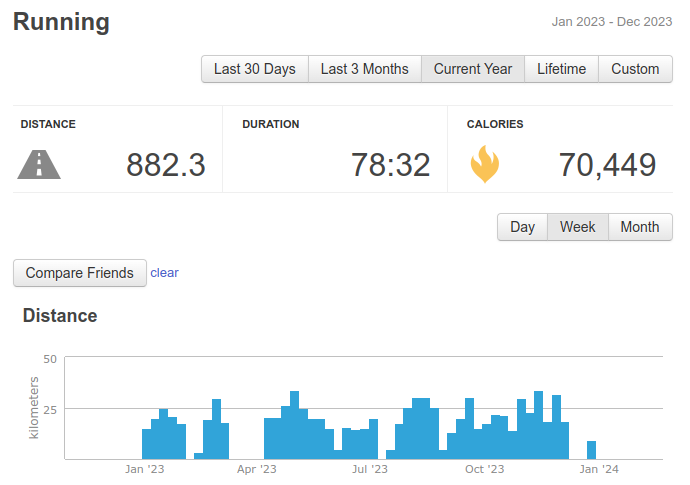
I had also brought my audio equipment, and when there were only talks in Dutch, I took the opportunity to interview some people still roaming around in the hallways. It turned out to be a theme about organizing events, and what events mean to us in the movement.
Today, Wikidata turns 13! 🎉 I am bringing a few small gifts. Two of them were already described in the Hackathon blog post I made earlier this week, but I’ll mention them again.
First, it was the sparql-minimizer tool, that can make your queries smaller and easier to use in other tools.
One day in the grocery store, I found candy strings that came in almost red, green and blue and the way they were packaged got me associating to how we sometimes need to disentangle (detangle?) items on Wikidata. A photo shoot and some cleanup editing, and these images were made.
The last present just came in an inspiration, perhaps because I recently saw an old video of Sean Locke improvising a limerick. Anyway, here is mine.
A man from Q350. Had statements that looked a bit shifty. So without any force he added a source. With Citoid, oh wow, that was nifty.
Last Saturday, there was a one-day mini hackathon at the Wikimedia Nederland office in Utrecht. Just like the last time I went to one of these, I wanted to summarize the things I hacked on. As before, the atmosphere was great: relaxed and inspiring. The event space they have is working great, and in true Dutch style, the logistics worked great. I basically completed four tasks of various sizes and starting points. Completed may also be generous, that nothing is thoroughly tested and there is likely bugs to fix as soon as they get used. Thanks to User:TheDJ who helped me several times when I felt I was stuck.
Migrating to Codeberg
Last year I made a small animation for the Wikidata 12th birthday. As this have small and simple repository, I felt like a good starting task of the day was to migrate it to Codeberg. This was straightforward and just needed some minor adjustments in the README. The new thing for me was to learn how the concept of hosted “pages” works on Codeberg, and I got it working after just a few struggles. Feeling good from getting some administrative tasks that is a part of some overarching goals for me, I went on to a slightly more challenging task.
Adapting the animation for MediaWiki
A static HTML is nice, but what if I could get the animation onto a wiki? I lately learned about TemplateStyles, so this was a way to test my skills. After some struggle with changing ContentModels of a page on the wiki and sanitizing the CSS, my templatestyle showed up nicely on a test page.
Making and showing slides onwiki
This was my big goal for the day. I have enjoyed the reveal.js project and the way one can make very simple but still beautiful slides. What if I could do something similar, even if it is a lot simpler in turns of functionality, using user scripts and template styles to make it possible to create the slides onwiki and then show them in-place. No need for other presentation software or “uploading” slides. Easy to share and in a true wiki spirit also possible to collaborate or improve upon.
This turned out to be more difficult, mostly because I am not great at Javascript, but after some headbutting and repeated trial and error testing to see what was working or not I got something that has the basic functionality. With this I was positively surprised, because I wasn’t convinced that it would be possible at all when the day started (or when I failed to make progress in the middle too).
With a userscript, a templatestyle and some special html elements in the wiki page syntax it can be used. Just press the Play slideshow button and navigate with left and right arrow keys. I also spent too much time to get the previous animation to show up on a slide. It’s not a great solution but I think it fits a hackathon (see slide 6) and it is not really the part of the framework I will start using in the future so see that as a fun bonus.
Making SPARQL queries smaller
This project was almost done when I arrived and my original plan was just to get it deployed on toolforge. My initial driver to start this was just to make a tool to convert a query to a one-line query, as some other tools are requiring it and fixing them manually (even with good find and replace tools) were getting tedious. Once started, it was impossible to unsee other things that could also be cleaned up. So there I was with a tool working fairly good locally. And I am pretty sure I was this far when Albin shared a similar tool that he already had deployed, so I stopped working on it. But with some time over at the hackathon, and unable to find his tool at the moment, I added a few more options to my tool and then got it deployed at sparql-minimizer.toolforge.org.
I 2019 tog jag och Magnus över programledarrollen för Wikipediapodden, och vi har hållit i sedan dess. Precis nyligen gjorde vi avsnitt 300!
Det har varit en kul resa och över tiden har vi gjort små förändringar här och där. Vi har prövat olika segment, olika längder och frekvens. Men två saker har varit konstanta.
För det första att det främst är en nyhetsuppdatering. Det var så det började, och det är också det som jag tycker främst saknas. Det gör det dessutom att vi behöver vara mindre kreativa varje vecka, eftersom att vi återspeglar vad som händer i de olika gemenskaperna.
För det andra att vi har fokuserat på att ha kul själva och vara generösa mot oss själva. Vi siktar på ett avsnitt inspelat samma tid varje vecka men om livet slänger in oväntade händelser har vi alltid enkelt spelat in en annan dag eller hoppat över en vecka. Jag tror att det är en viktig del att vi fortfarande håller på.
Samtidigt vill jag ge ett stort tack till Wikimedia Sverige som ger oss stöd för webbhotell, inspelningsprogram och teknik. Utan det skulle nog vi aldrig tagit oss dit vi är idag.
We had a well attended meeting and managed in the end to agree on the annual plan. It’s our first, so I consider it a big success, even though the ambitions in it are fairly low. We didn’t get around to finalizing the strategy yet, though. That will be for early next year.
Newsletter
I did get a last newsletter of the year out, too. An interesting study there that gets on my reading list.
Again, there were over 500 finalists from the participating countries, and while it is an absolute pleasure to get the opportunity to look at them in detail, it is also a tough work ranking them against each other. After a first round, about one quarter of the images were left for a final round. The tooling was just as great as last year, and the organizers did very well in guiding us jurors in our work. And that got us to a result.
So once again I have the pleasure to see that twenty winners have finally been announced. Head over to wikilovesearth.org and check them out, there are some true gems there. Or flip through the full jury report.
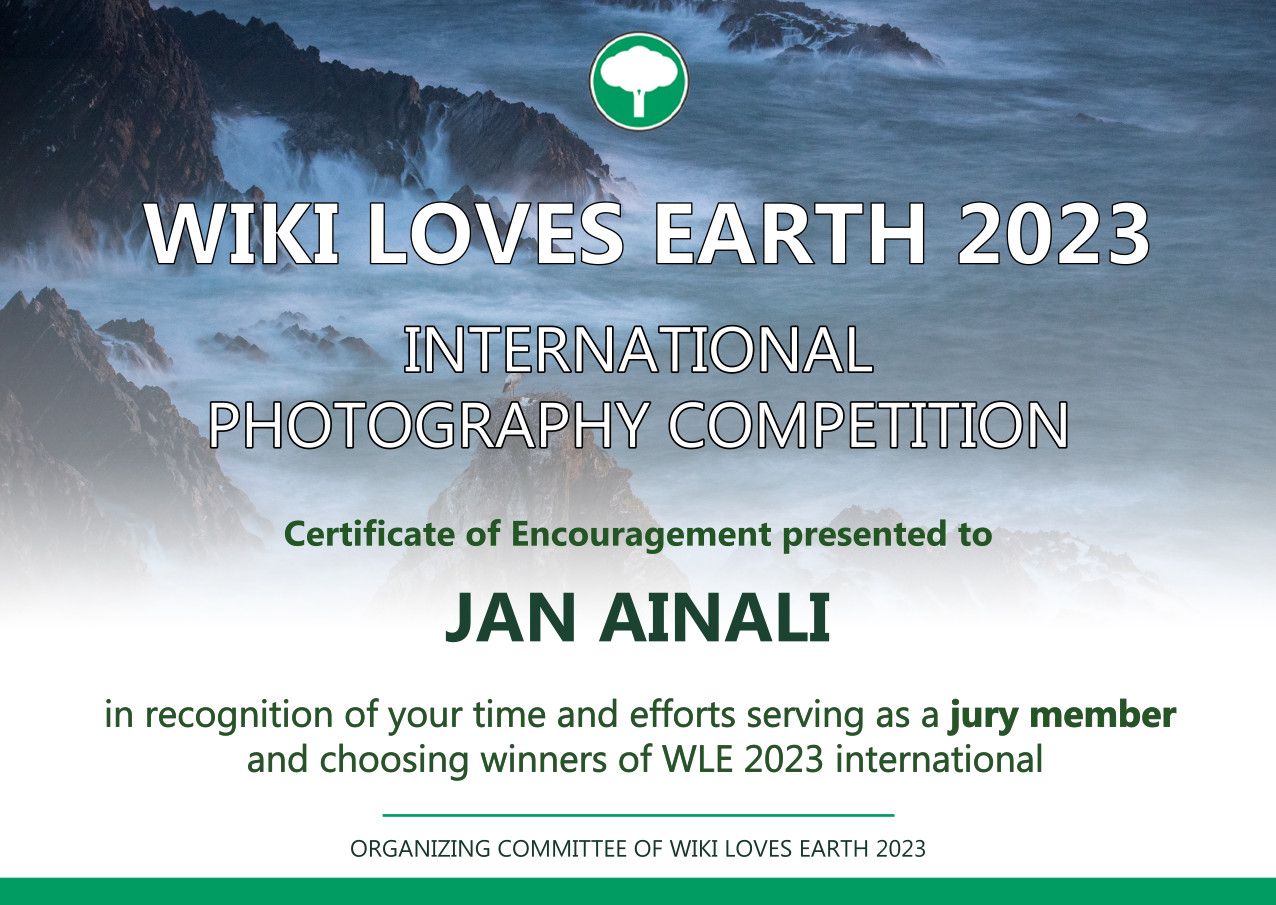
Certificate to jurors.
Of course, in a jury with 11 jurors, there will be some compromises, but as my favorite images made it to the top ten I am still happy with the overall result. My absolute favorite of them all was this stunning landscape.
We did have a tiny but constructive user group meeting (minutes) in November which brought up one good new idea about exploring new media and coordinating that work. I added it to the strategy which is starting to come together to the point that I think we can use it for 2025 and then incrementally improve it. As the year is quickly coming to an end, I also set up a page for our annual plan for next year to start collecting some tangible ideas.
Newsletter
The newsletter came together this month too, and this time also with a new contributor which was nice.
CEE catch-up call #8
The Central and East Europe hub have catch-up calls and for their 8th I was invited to give a brief introduction to the user group. It was recorded but neither the video nor the slides (I added mine to their slide deck) have been uploaded to Wikimedia Commons yet.
I created a first draft of the strategy for 2030 by moving the ideas we came up with at our last meeting. It’s not fully fledged, but perhaps it is good enough to provoke a reaction, or to see what is missing when we get down to annual planning.
This month, after a discussion I initiated, we opted to deactivate the Twitter account @wikisusdev: Internet Archive.
On a more constructive note, I also engaged a new moderator in the Facebook group. I truly hope to be able to get more people involved like this, by taking on quite small tasks. Not only will it unburden me, but my ambition is that it will increase the sense of belonging, community and agency in the process and development happening in all these ends.
On Tuesday, 29 October, Wikidata turns twelve, and I had been thinking about creating a small birthday gift to celebrate. Earlier, I had experimented with creating an animated background to use in our Editing Wikidata live streams, but never got one that worked well. But the thought popped up again, and perhaps I could do something different.
As it were, another thought I had also been pondering was how to do a refresh on the older web slides I used to present and if I could use the animated background I have on aina.li. Two thoughts turned into one, and I made an animated Wikidata background for the web.
Yes, it is a bit silly, and not hugely useful for the sum of human knowledge, but a celebration has to be a bit fun too. So happy 12th birthday Wikidata, I hope you enjoy all your gifts.
September was more hectic than planned, so here comes two months of reporting at once.
Wikimania
As I mentioned last month, I organized a meetup for anyone interested in sustainable development. While decently attended, it did not pan out the way I had planned. Instead of sharing ideas of what to do, there were plenty of people who felt a need to vent their worries about the climate change. I think for the future, having a separate climate café where people just can talk about that would be useful and can make the community more sustainable in itself.
I don’t know if many others used the list all sessions related to the SDGs that I created, but at least it was useful to me during the event.
User group meetings
We had meetings in both August and September, in the first we mostly did some planning and in the second, we started the work on a strategy for the user group. More work to do in the following weeks.
Newsletters
While hectic, I managed to get the newsletters sent both for August and September.